Skip to content
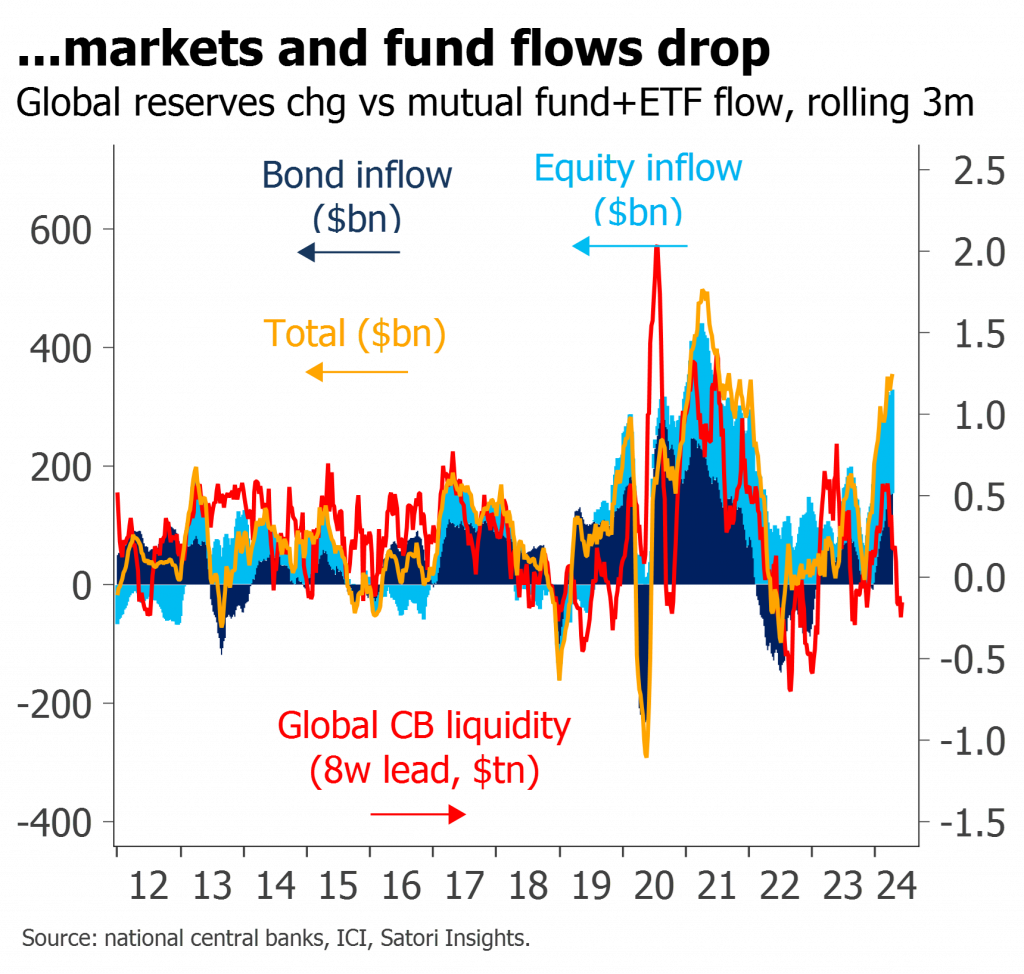
- The $280bn weekly drop in Fed reserves is the largest since Apr22
- Just as then, it coincides with a correction in markets
- A drop in fund inflows seems likely to follow
- But this still feels more like seasonal correction than decisive turn
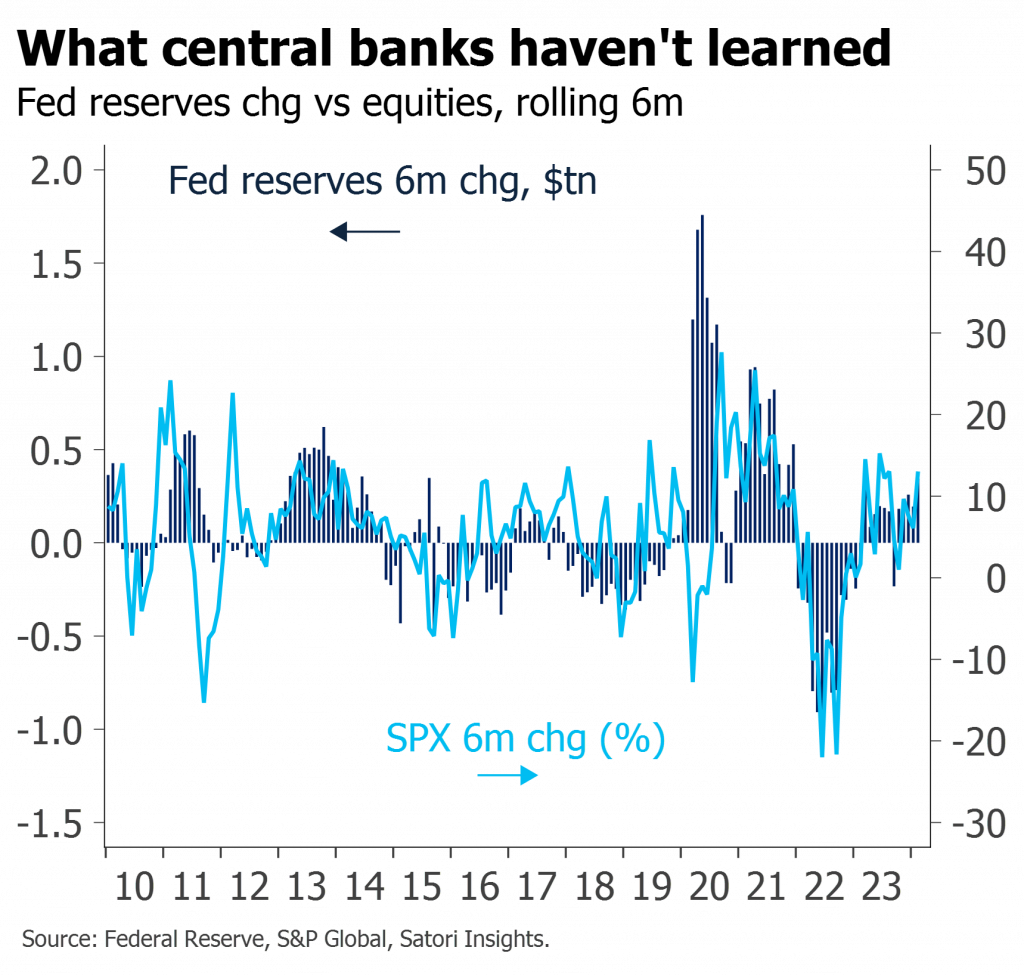
- The latest central bank research on QT is careful, rigorous, and grounded in the literature
- Unfortunately its main conclusion – that QE affects markets while QT doesn’t – is at odds with the lived experience of most market participants
- There is a much simpler reason why QT has had so little apparent impact
- Misunderstanding of this dynamic greatly contributes to the likelihood of future policy mistakes

- The rally in risk is often attributed to strong earnings
- But calendar earnings estimates have mostly been falling
- Macro drivers, not organic estimate optimism, are the true source of the markets’ strength
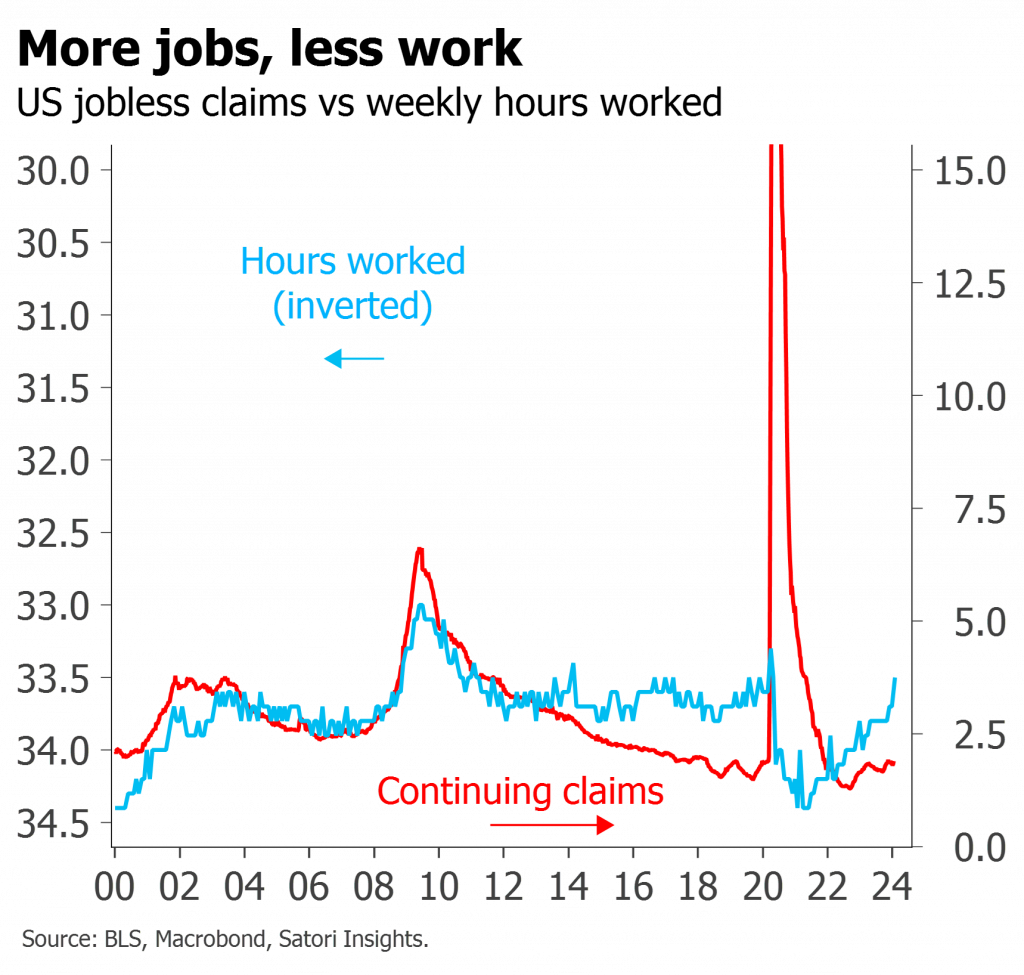
- After several months of liquidity tailwinds, risk asset pricing is starting to look excessive
- Improving spending, orders and hiring are all positives
- Despite this, earnings estimates are falling
- Fundamentals are reflective more of sticky supply than of dynamic demand
- Ongoing price pressures may well curtail central banks’ desire for dovishness
- But excitement about higher r* remains overdone

- Hark! The VC angels sing
- God rest ye, merry crypto bros
- While PMs watched tech stocks take flight
- I’m dreaming of a tight market
- To be sung, please, in a spirit of global harmony

- The biggest surprise of 2023 was not the resilience of the US consumer
- It was that central banks added nearly $1tn in liquidity, rather than removing $1tn as had been widely expected.
- This swing alone is worth 20% on equities – almost exactly the YTD gain in the S&P.
- We think 2024 will show central banks have overtightened rates whilst simultaneously overstimulating risk assets.
- But we also fear their misunderstanding of the dynamics means they may yet do more of both.

- Poor risk asset performance in Sep/Oct reduces gap to CB liquidity
- Fed $300bn reserve increase over past eight weeks helps explain renewed rally in S&P
- Conversely, despite talk of stimulus, China liquidity injections remain lacklustre
- Liquidity outlook still driven by RRP – and is much less negative than might be expected

- Persistent fiscal deficits are increasingly cited as the #1 reason to short bonds
- But the historical record is remarkably and perplexingly clear
- High debt levels, and even high fiscal deficits, have historically been associated with bond yields falling, not rising
- Only in part does this reflect factors like financial repression
- It is also due to the counterintuitive nature of the credit creation process itself
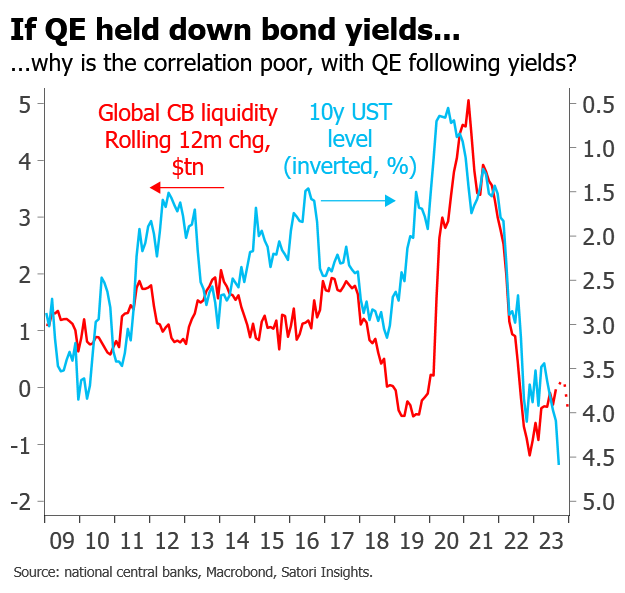
- It is often said that QE held down bond yields, meaning QT should be a major contributor to this year’s rise
- But the evidence for this is deeply questionable
- QE does indeed hold down real yields, through a portfolio balance effect
- But it also pushes up inflation breakevens via signalling
- What is missing so far from this round of QT is the historical fall in breakevens
- The true driver of higher bond yields lies with inflation, not QT
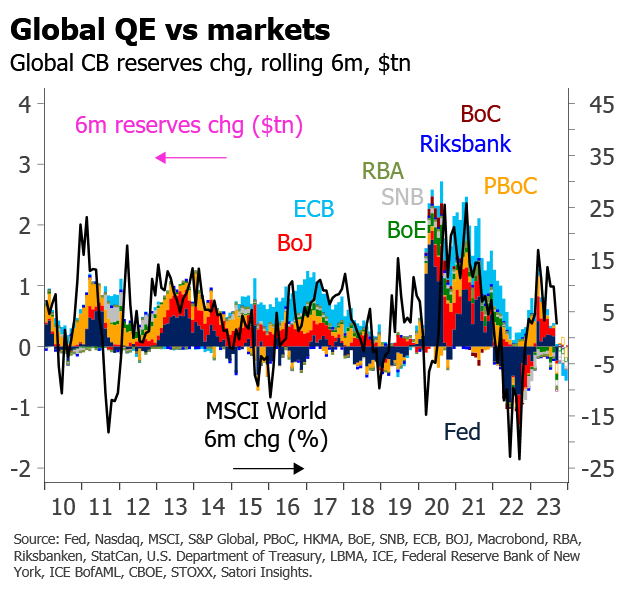
- CB liquidity still a better explanation of risk asset performance than many fundamentals
- H1 liquidity injections now fading
- Market performance – despite some prior ‘excess’ – largely fading in line
- Prospects mostly negative but depend on RRP, BoJ and explanation for the prior ‘excess’