The blinkered Fed

  • In a narrow technical sense, the FOMC was indeed hawkish
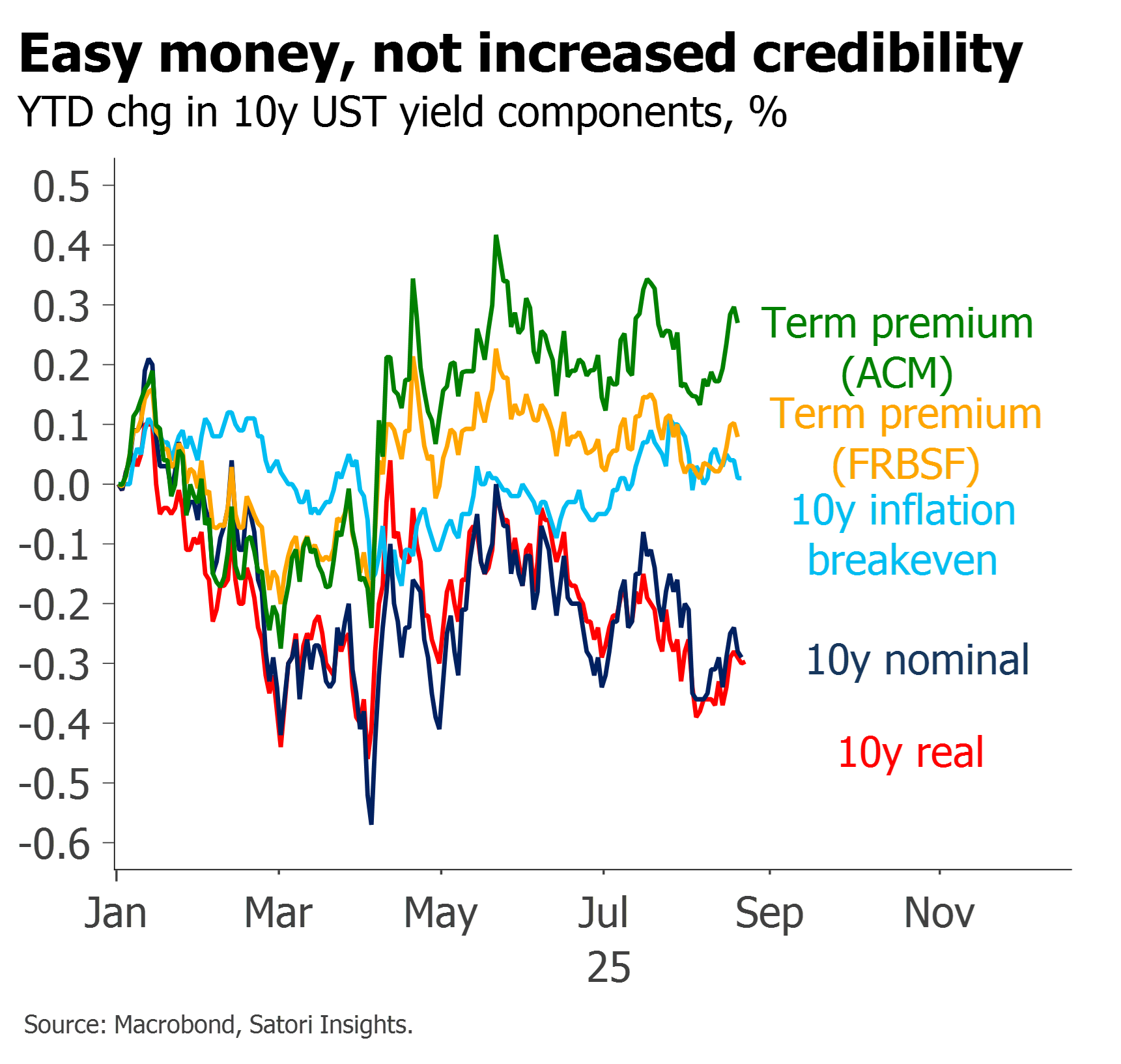
  • But in the cessation of QT and through questions, it more broadly reconfirmed a reaction function at once deeply asymmetric and completely oblivious to asset price inflation
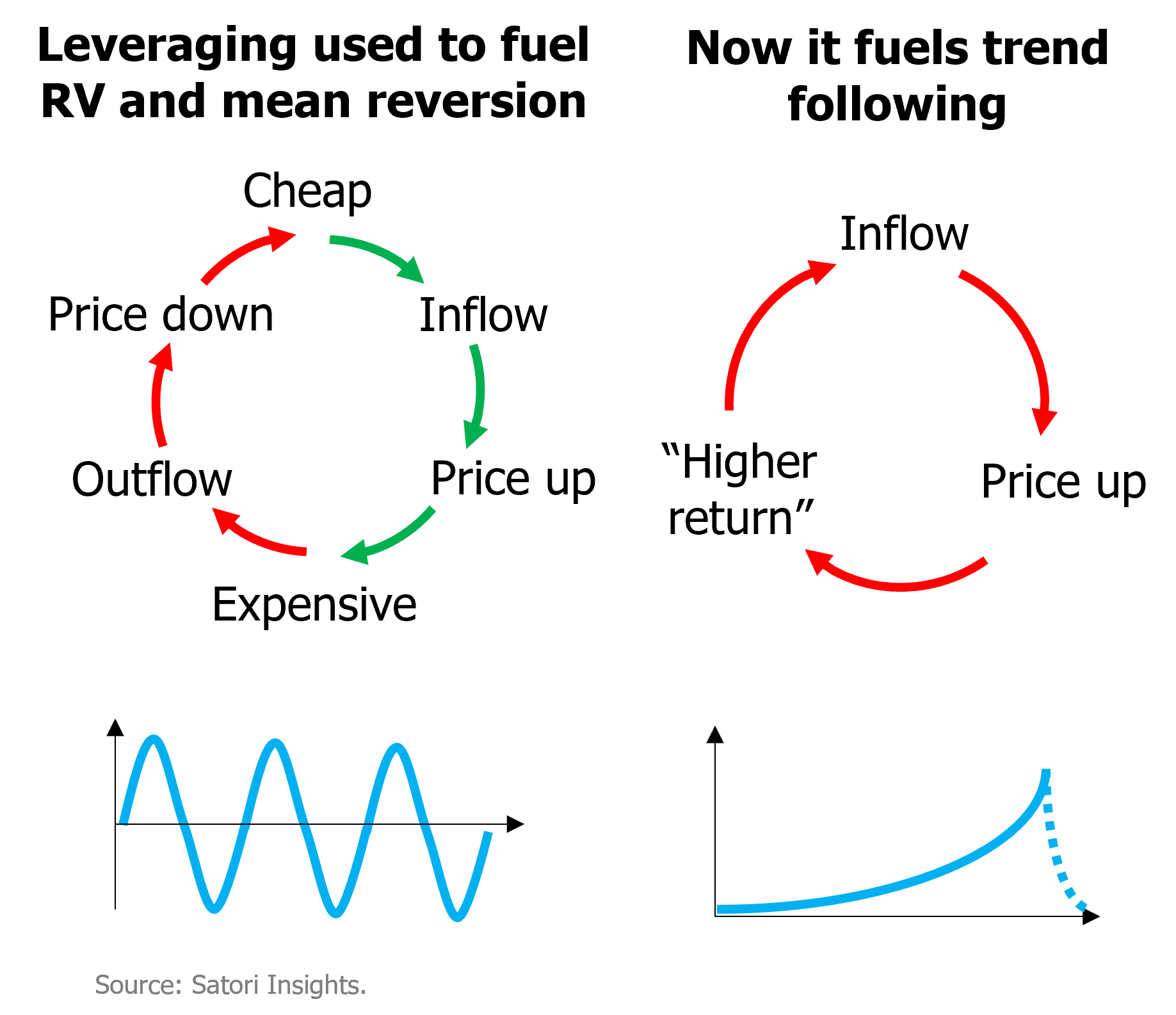
  • This paves the way for a further melt-up in risk assets and havens – and for more assets to exhibit the sort of exponential sawtooth boom-bust recently seen in gold

The long-bond problem

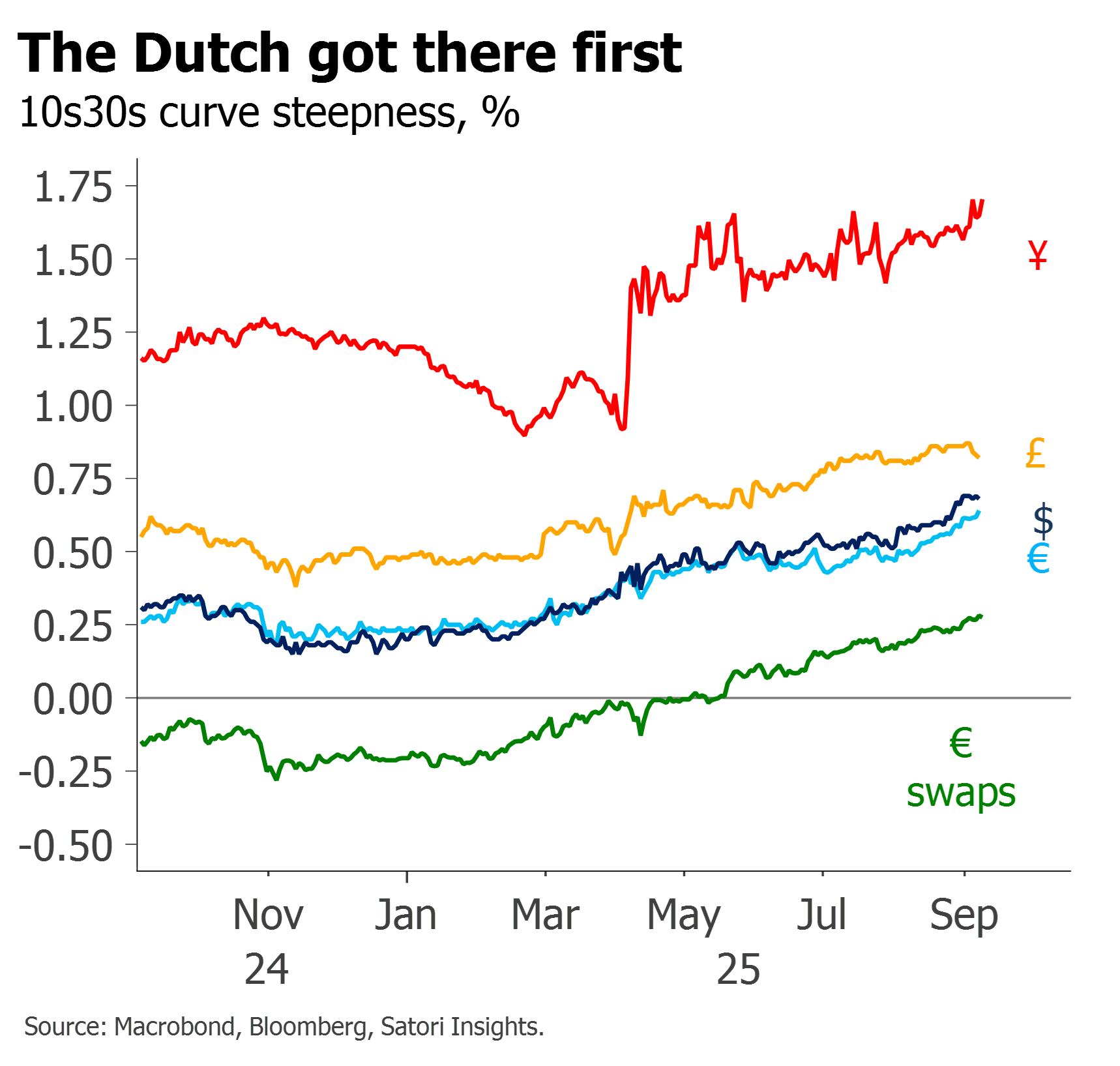
  • The recent “bond rout” would be better described as a long-end bond technical
  • It reflects dwindling pension demand more than existential fears around inflation or debt sustainability
  • Governments should reduce their long-end issuance accordingly
  • Investors should continue to hold steepeners until they do – without necessarily being short duration

Trading a decaying hegemon

  • The more Trump exerts personal control over US organs of state, the more the US’ real power is eroded
  • The main mystery is why this is still not being priced into markets
  • Part of the answer revolves around the amorality of capitalism, and prospects for more easy money
  • But much is attributable to the extreme and abrupt nature of credit repricings

When does liquidity turn to fumes?

  • Commentators argue increasingly that tariffs matter little, and for the return of US and tech exceptionalism
  • But this risks retro-fitting the explanation to the price action
  • An examination of the monetary data points to the exceptional way in which fiscal stimulus has been fuelling equities

More on Section 899

  • Like tariffs, Section 899 continues the Trump administration’s declaration of economic war against erstwhile allies
  • As with tariffs, there remain considerable questions about the scale and scope of its eventual application
  • But the net effect should still be to cause foreign investors of all types to question their investments in America

Shorting spendthrift sovereigns

  • Even before Trump’s EU tariff tweets, the risk rally had seemed unconvincing
  • This is in part because bond market developments are so concerning
  • But we think there are better ways to position than outright shorts in 30y govies

Gradually, then suddenly

  • The bounceback in risk is unconvincing
  • This is in part because of overoptimism that tariffs and economic pain can be avoided
  • It is also because sentiment across markets has moved much more than actual positions
  • But ultimately it is because Hemingway’s famous quip applies as much to reserve currencies as to personal bankruptcy

Three thoughts on tariffs

  • The announced headline tariff rates are all over the place
  • But tariffs in general are more punitive than consensus expected, even after the inclusion of VAT
  • The immediate market response is being clouded by liquidity factors

T-Day landings and liquidity

  • Despite all the attention to tariffs, short-term market moves remain surprisingly well correlated with CB liquidity
  • Liquidity dynamics have the potential to amplify any T-Day relief rally
  • But we would still fade any such move thereafter

Deficits, debt, and dollar devaluation

  • It is remarkable that proposals for a Mar-a-Lago accord have not yet sparked an even greater flight out of US dollars, debt, and risk
  • That they have not yet done so is thanks to a mix of incredulity, inertia, and temporary liquidity factors
  • Current account deficits, though a source of vulnerability, are in many respects a measure of attractiveness to foreign capital
  • What’s damaging is when – as in the US – they are allowed to turn into ever-escalating debt
  • What the Mar-a-Lago proposals’ discussion of sticks and carrots lacks is a proper notion of trust – and of the scale and suddennness of the consequences once it has been lost

satori insights full logo transparent

Please log in to continue reading.

This indicates whether you're logged in
satori insights full logo transparent

Login successful.