Skip to content
Free excerpt from 16 Oct webinar
Markets’ aggressive pricing of a soft landing is matched only by central banks’ determination to provide it
Yet their dovishness masks a switch from rate tightening and balance sheet easing to rate easing and balance sheet tightening
The resultant uncertainty is largely reflected in rates – but leaves opportunities in other markets
Available to all; full replay available only to clients with Group Webinar or One-on-One subscriptions.
Free clip from first ten minutes of 3 July webinar
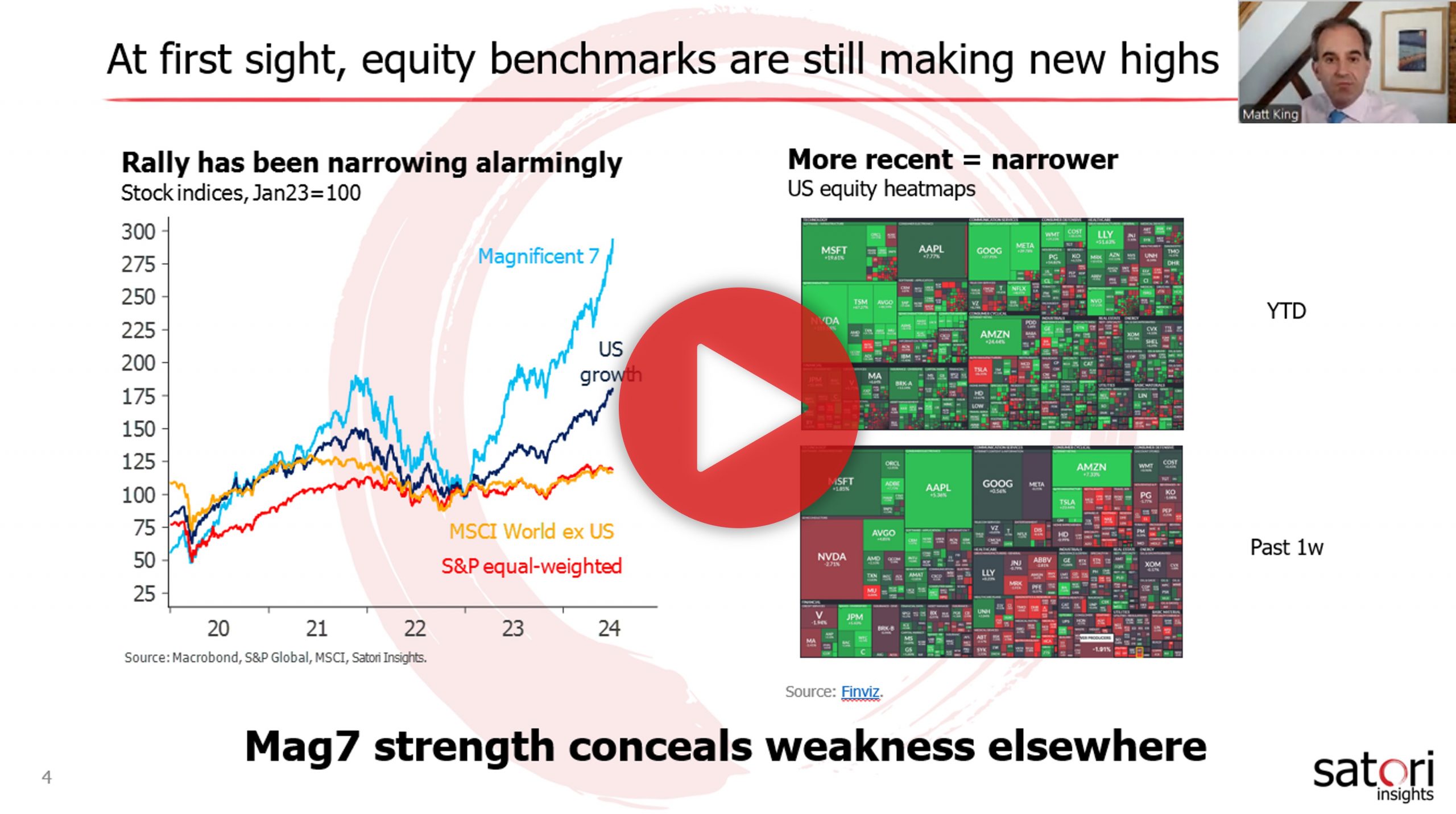
Even as the rally continues, it does so on ever more fragile foundations
The problem lies neither with the economy, nor with central banks being slow to lower rates, nor even with politics
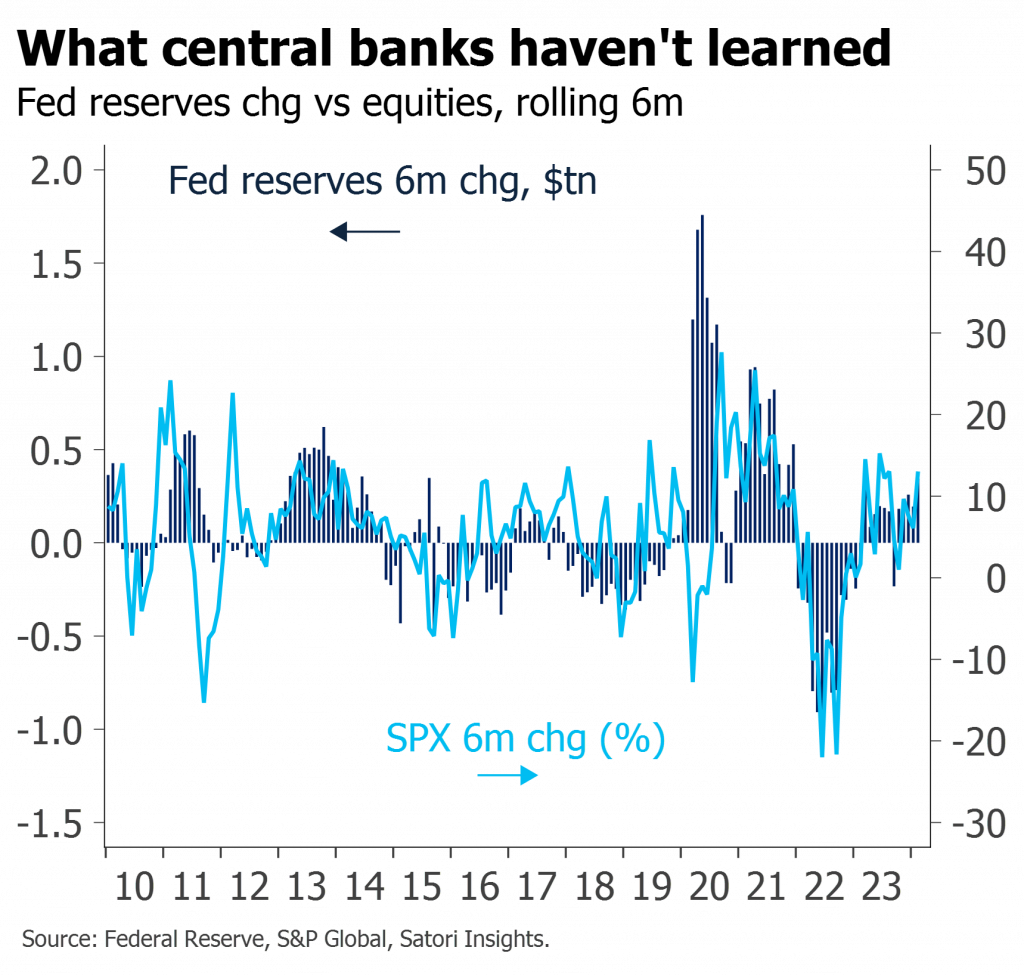
It is that the liquidity which fuelled markets in H1 looks increasingly likely to be turned off
Recent softness in risk is not just the fault of France
The underlying drivers of the rally have been faltering
The outlook for H2 just darkened considerably
Free clip from first ten minutes of 2 May webinar
The exuberance in risk assets is less a consequence of a stronger economy than a driver of it
The expectation of rate easing was never critical – which is why the exuberance has largely persisted even as yields have backed up
It is instead the direct consequence of investor crowding following easy central bank balance sheet policy – and vulnerable to any reduction in CB liquidity
The latest central bank research on QT is careful, rigorous, and grounded in the literature
Unfortunately its main conclusion – that QE affects markets while QT doesn’t – is at odds with the lived experience of most market participants
There is a much simpler reason why QT has had so little apparent impact
Misunderstanding of this dynamic greatly contributes to the likelihood of future policy mistakes
Free-to-view replay of first segment of 16 Jan webinar
Why strategists struggled in 2023
A better way to think about markets
Implications for 2024
Hark! The VC angels sing
God rest ye, merry crypto bros
While PMs watched tech stocks take flight
I’m dreaming of a tight market
To be sung, please, in a spirit of global harmony
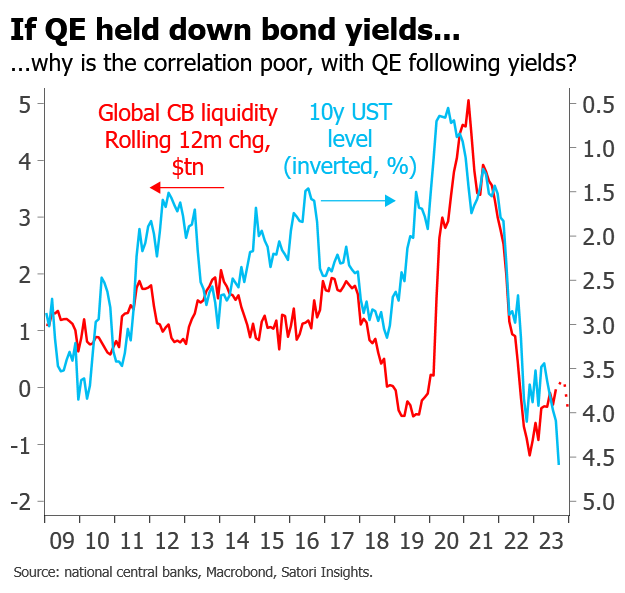
It is often said that QE held down bond yields, meaning QT should be a major contributor to this year’s rise
But the evidence for this is deeply questionable
QE does indeed hold down real yields, through a portfolio balance effect
But it also pushes up inflation breakevens via signalling
What is missing so far from this round of QT is the historical fall in breakevens
The true driver of higher bond yields lies with inflation, not QT