From exuberance to unwind

  • War in the Middle East is interacting with prior market vulnerabilities
  • The problem lies neither with the growth outlook nor with the risk of an inflation spike
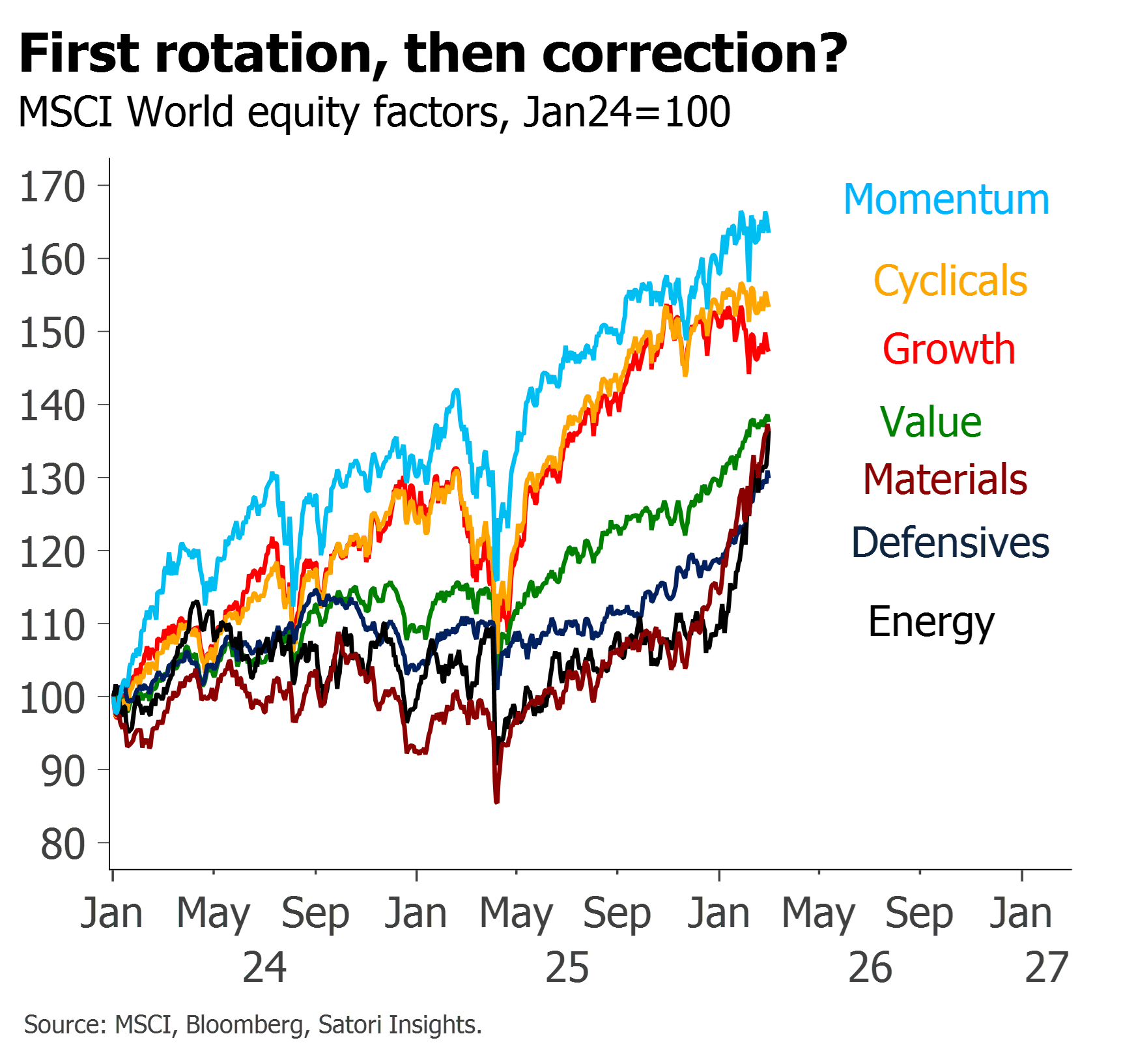
  • It is that investors suddenly have multiple reasons to shift from what had already been violent risk rotation to outright risk reduction

We need to talk about Kevin (and Isabel)

  • Warshian balance sheet contraction need be neither psychological thriller nor horror flick
  • Non-US jurisdictions combine lower reserves with less money market volatility
  • It’s just a question of shifting from supply-led to demand-led liquidity provision

The radicalism of a Warshian Fed

  • Markets are starting to recognize the radicalism of a Warshian Fed
  • But they are pricing its impact too narrowly
  • The key involves understanding the link between balance sheet, rates, and affordability

The enshittification explanation

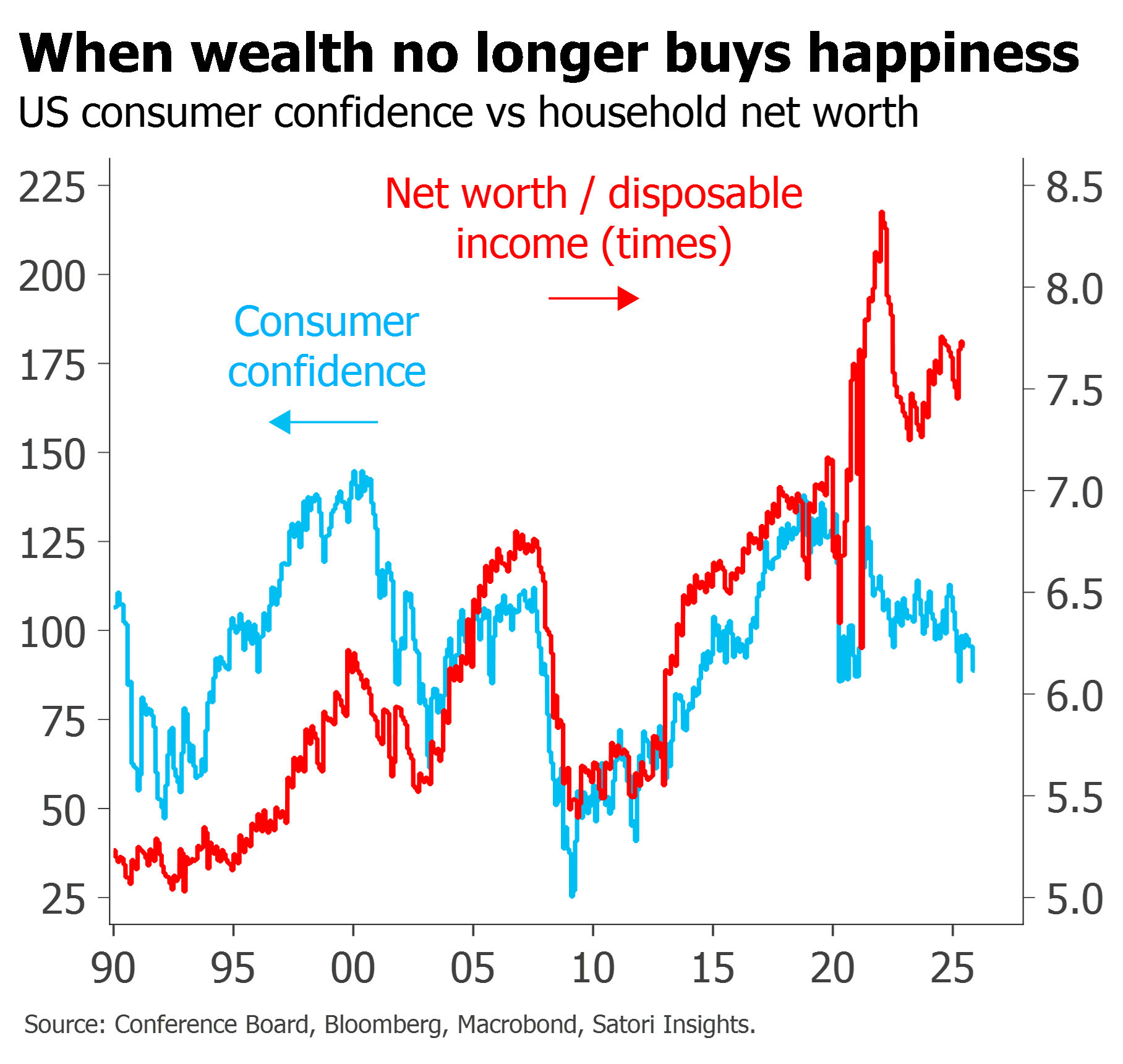
  • The more markets rise, the greater is the gap to consumer sentiment
  • We are used to explaining this in terms of a K-shaped economy
  • But together with record profit share and margins and the narrowness of the equity rally, it is also consistent with monopolization, regulatory capture and enshittification
  • This helps explain why not only labour but also consumers are suffering, implies a critical role for politics – and ultimately paints a more fragile picture of society collapsing towards technofeudalism

When froth turns to fear

  • Markets are reeling from a monetary triple whammy: repo tightness, a faltering of other forms of credit creation, and a record $900bn in reserves drainage
  • But all these sources of monetary tightness ought to ease
  • The question is whether this episode drives a more enduring reduction in risk appetite and fund flows

Why shutdown squeezes funding

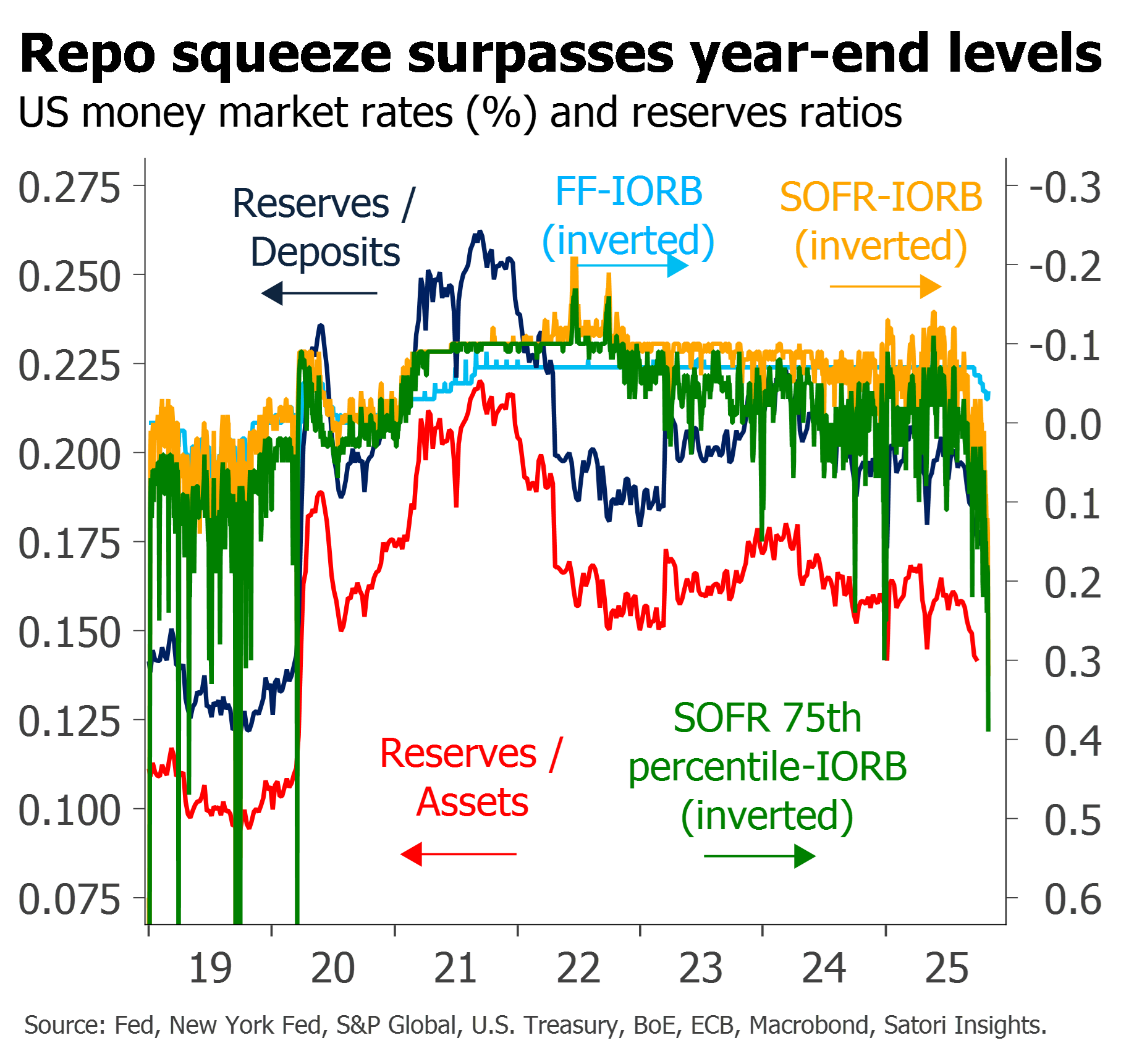
  • US repo rates have already spiked beyond year-end levels
  • The squeeze seems likely to continue – and intensify – while the US government shutdown does
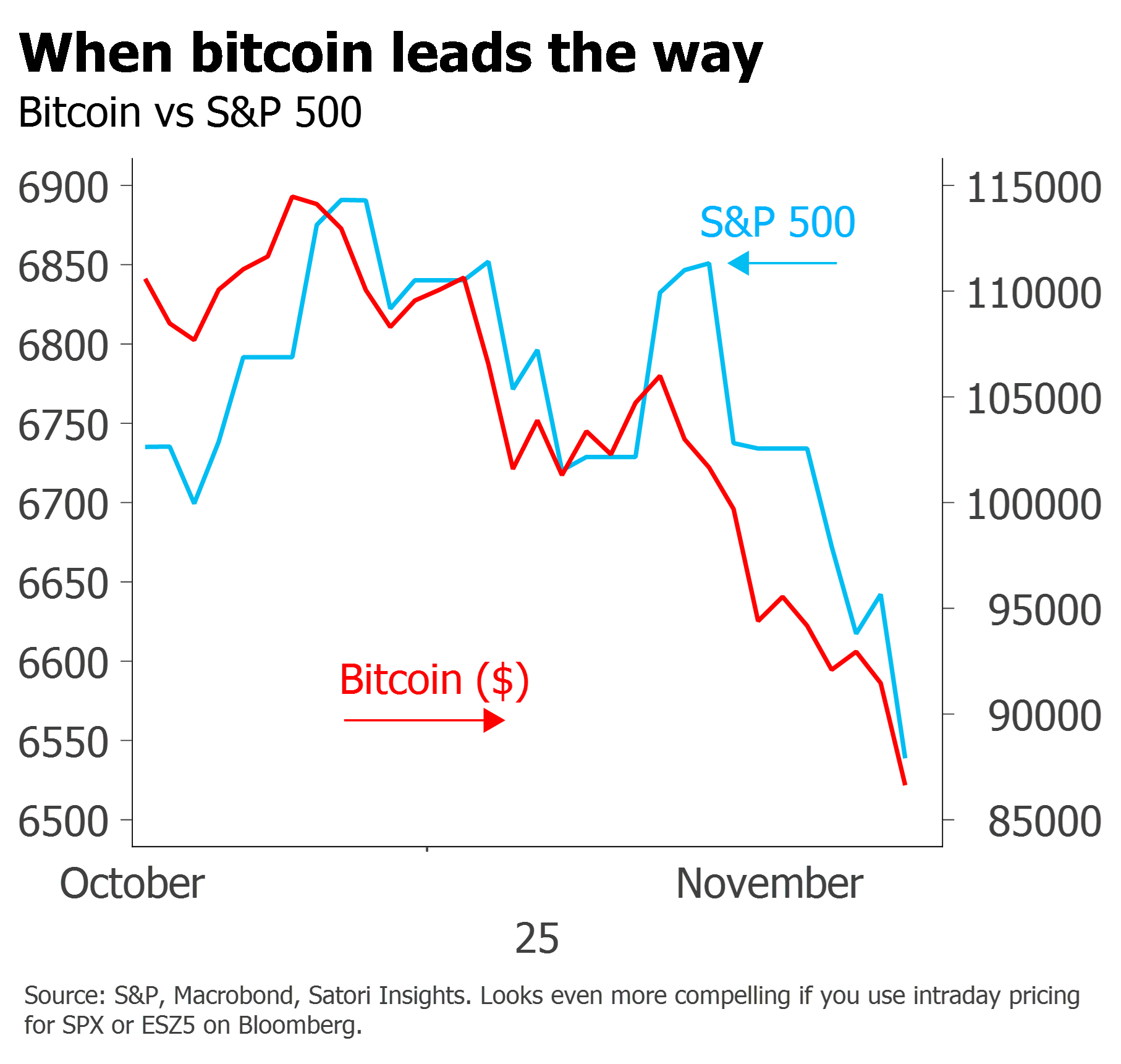
  • The immediate consequences are $-positive and risk-negative – but mostly point to a deeper unwind of crowded hedge fund positions

The blinkered Fed

  • In a narrow technical sense, the FOMC was indeed hawkish
  • But in the cessation of QT and through questions, it more broadly reconfirmed a reaction function at once deeply asymmetric and completely oblivious to asset price inflation
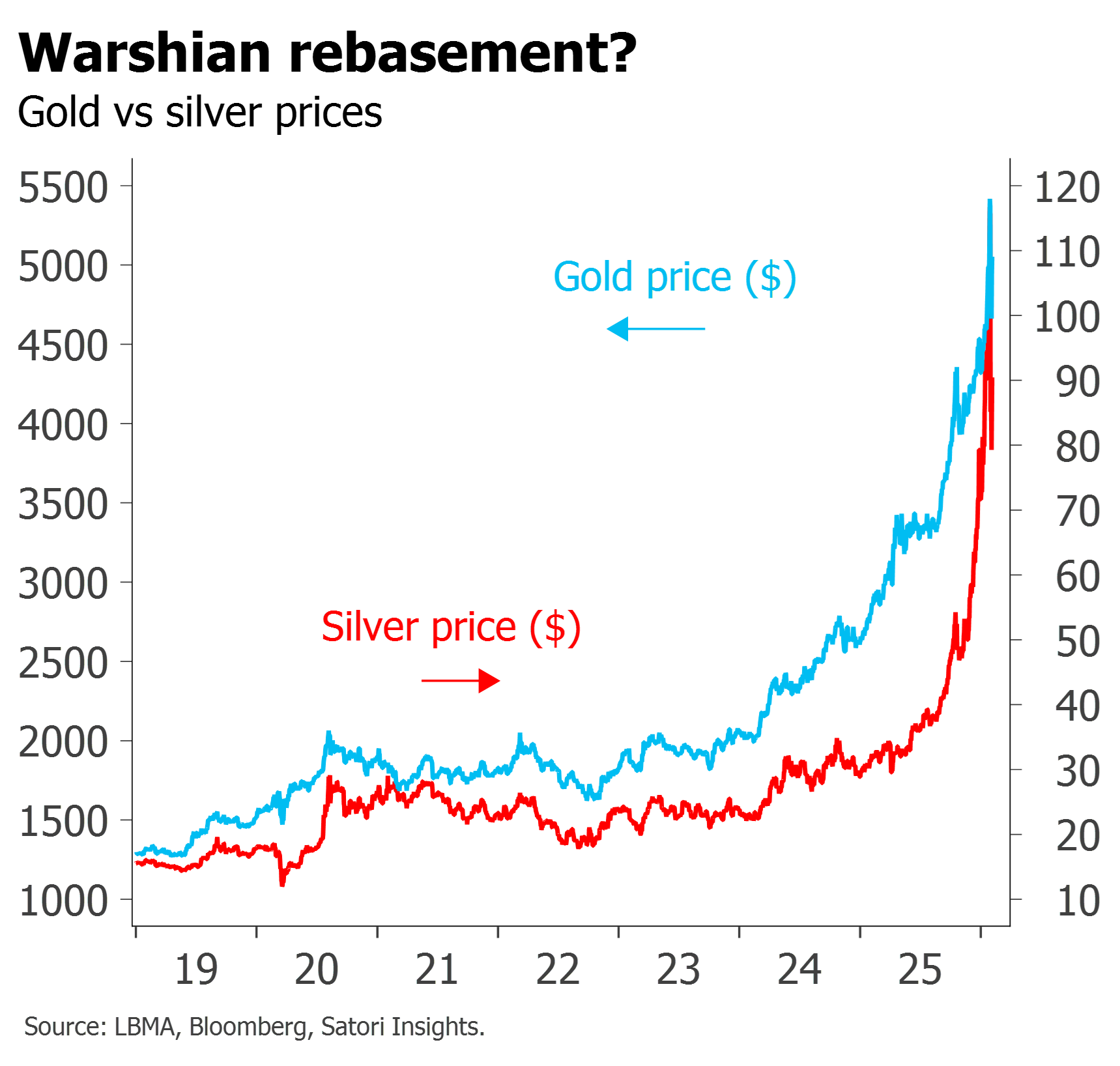
  • This paves the way for a further melt-up in risk assets and havens – and for more assets to exhibit the sort of exponential sawtooth boom-bust recently seen in gold

The long-bond problem

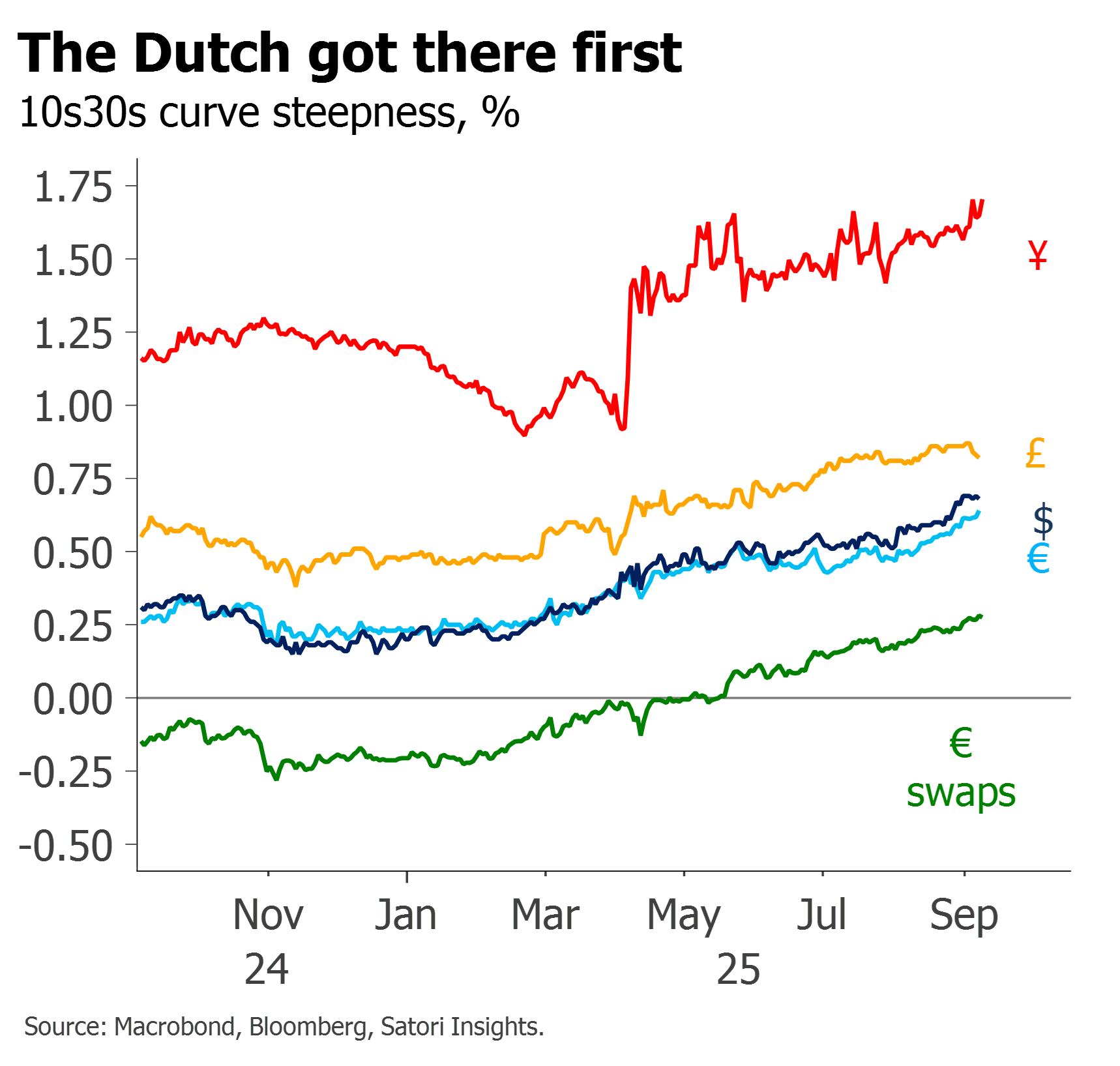
  • The recent “bond rout” would be better described as a long-end bond technical
  • It reflects dwindling pension demand more than existential fears around inflation or debt sustainability
  • Governments should reduce their long-end issuance accordingly
  • Investors should continue to hold steepeners until they do – without necessarily being short duration

Trading a decaying hegemon

  • The more Trump exerts personal control over US organs of state, the more the US’ real power is eroded
  • The main mystery is why this is still not being priced into markets
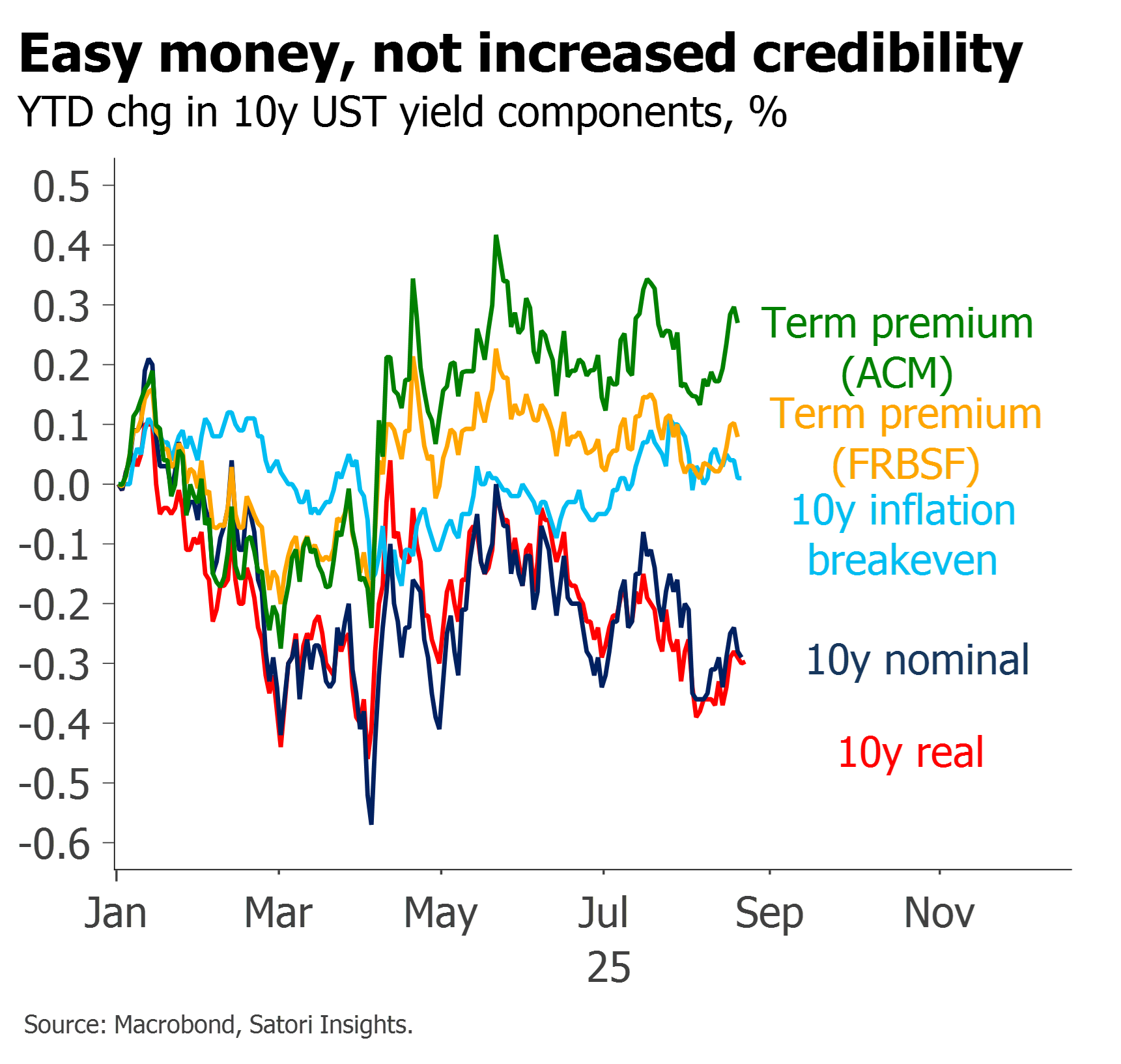
  • Part of the answer revolves around the amorality of capitalism, and prospects for more easy money
  • But much is attributable to the extreme and abrupt nature of credit repricings

When does liquidity turn to fumes?

  • Commentators argue increasingly that tariffs matter little, and for the return of US and tech exceptionalism
  • But this risks retro-fitting the explanation to the price action
  • An examination of the monetary data points to the exceptional way in which fiscal stimulus has been fuelling equities
satori insights full logo transparent

Login successful.